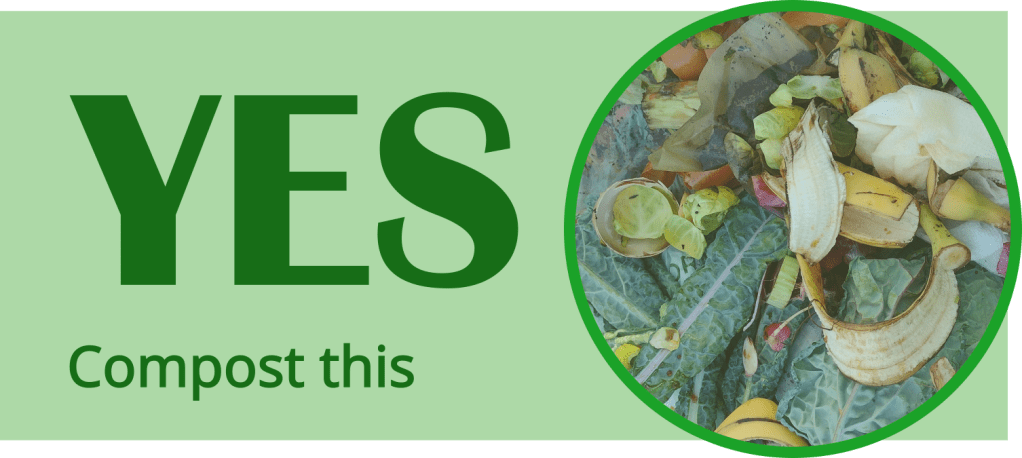
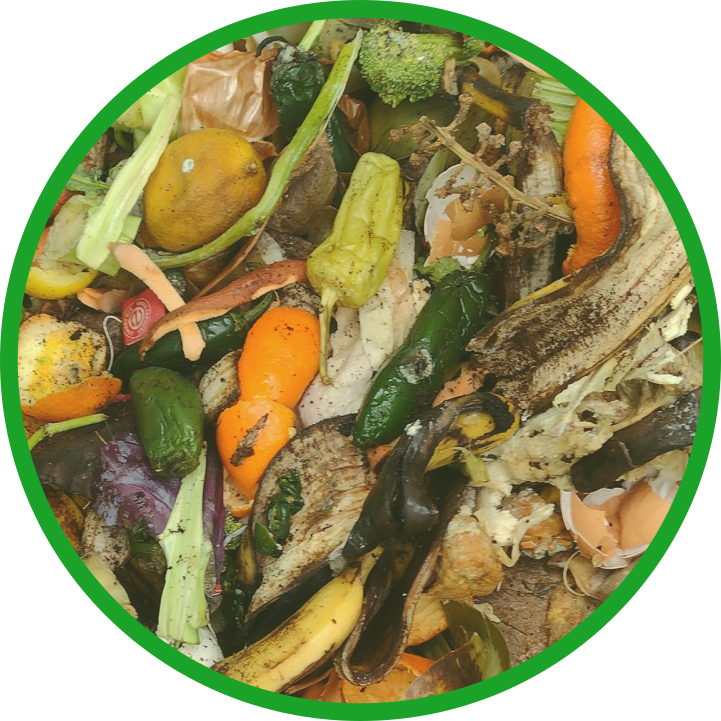
- All food scraps, cooked or raw, including:
- eggshells
- meat
- bones
- dairy
- seafood and shells
- Coffee grounds and paper filters
- Tea bags (if not synthetic)
- Paper napkins, any color
- Paper towels
- Tissues
- Chinet-style paper plates
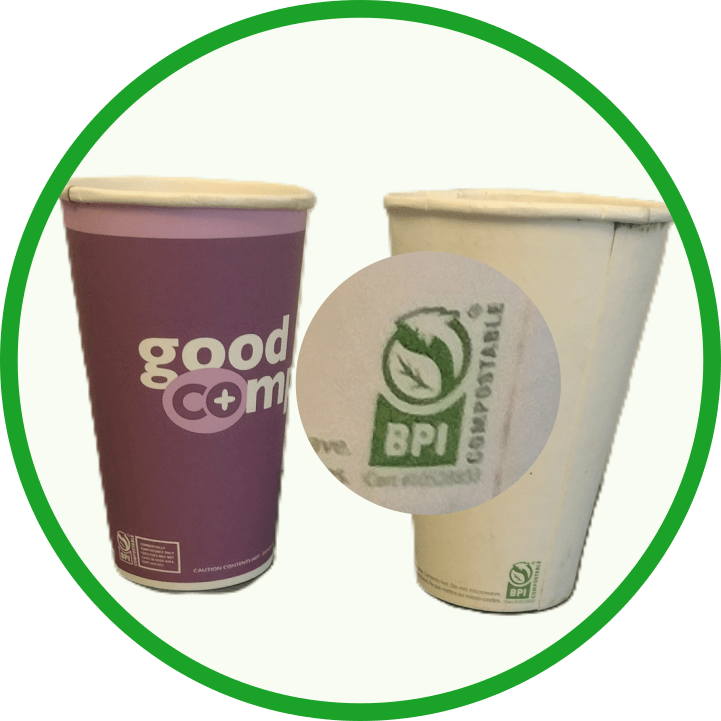
- BPI-certified* “plastics” including:
- bags
- utensils
- cups
- plates
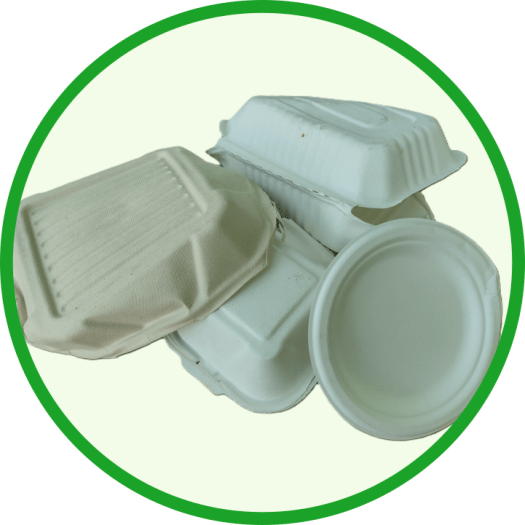
- Molded paper/fiber clamshell take out containers
- Paper sandwich wrappers, wax paper, parchment paper
- Wooden single use items like:
- toothpicks
- popsicle sticks
- chopsticks
- eating utensils
- coffee stirrers
- bamboo skewers
- Pet food and treats including raw hides
- Paper cupcake or muffin liners (Watch out for ones that have a plastic liner making them not compostable)
- Paper egg cartons
- Wine corks (natural cork, not plastic)
- Old condiments, herbs and spices, free of packaging
- Pizza boxes (consider recycling if not heavily food-soiled)
- Cardboard food boats that do not have a plastic film moisture barrier
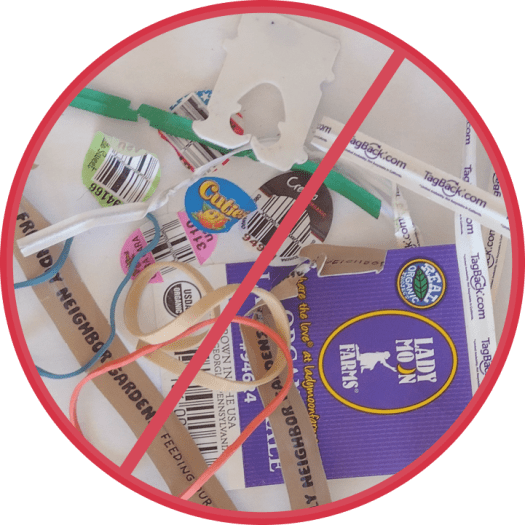

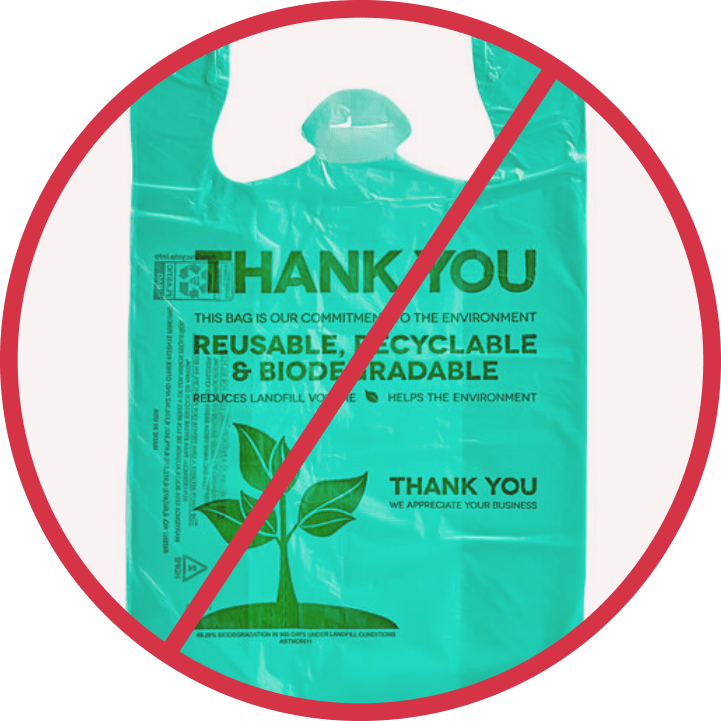
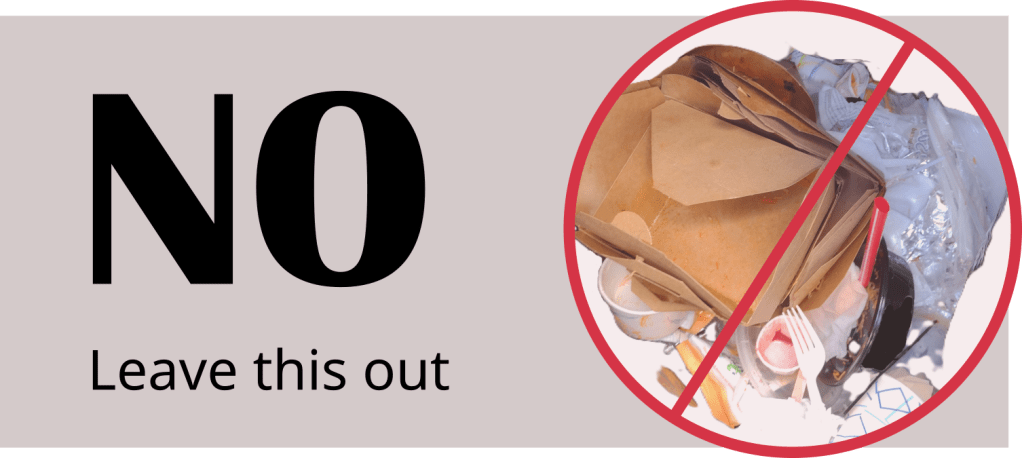
- Plastic (not labeled as “compostable”), Styrofoam, metal, and glass, including:
- any plastic bag that does not say “compostable”on it
- twist ties
- produce stickers
- Yard waste
- Pet waste, and diapers, even if labeled as compostable
- Paper cups that do not say “compostable” on them
- Frozen food boxes
- Plastic-lined envelopes, like:
- sugar packets
- some tea bag envelopes
- hot chocolate mix envelopes
- instant oatmeal envelopes
- Microwave popcorn bags
- Fabrics, burlap, cheesecloth, and felted items, even if all organic
- Rubber and latex items, like:
- rubber bands
- balloons
- gloves
- chewing gum
- Receipt paper – unless known to be BPA-free
- String, rope, twine
- Candle and cheese wax (unless known to be vegetable-based)
- Wet wipes and dryer sheets
- Cardboard food boats and takeout containers with a shiny interior indicating a sprayed-on plastic moisture barrier
- Any plastic (eg bags and utensils) not labeled as “compostable” on the products themselves even if their packaging and/or online description says they are compostable
- Bags labeled as “biodegradable” and not also “compostable”
*BPI-certified compostables will have a logo similar to this:
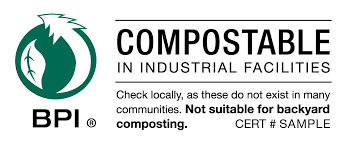
Also acceptable is this European equivalent of the BPI certification:

If it grows, it goes! If in doubt, leave it out!
Organics recycling has the lowest tolerance for contamination of all the recycling streams, requiring extra care in separating out your organic materials for drop-off.
Since compost becomes embedded in our shared land, water and food supply, providing beneficial services for all, it needs to be as pure and clean as possible.
By composting you show you value our environment. We need your help to make it work!
Compostable but NOT accepted at Community Drop-off bins
- Although fine to compost at home, the Community Food Scrap Drop-off program can not accommodate yard wastes due to its limited capacity. These can be brought to Harrisonburg’s Recycling Convenience Center to be used as part of daily cover of the landfill along with crushed glass.
- Pet wastes, including cat litter. These may be composted by subscribing to Black Bear Composting’s residential service, but NOT accepted at community drop-off bins.
- Compostable baby diapers. Dyper brand compostable diapers may be composted by subscribing to Black Bear Composting’s residential service, but NOT accepted at community drop-off bins.
- Holiday wreaths, garlands, Christmas trees.
- Large volumes of cardboard exceed the capacity of our drop-off. Clean paper products are best recycled if they cannot be reused. Once soiled or not recyclable, composting is an option. All plastic tape and tape on Amazon boxes with fiberglass threads, plastic windows and staples need to be removed before composting.
 Harrisonburg Composts