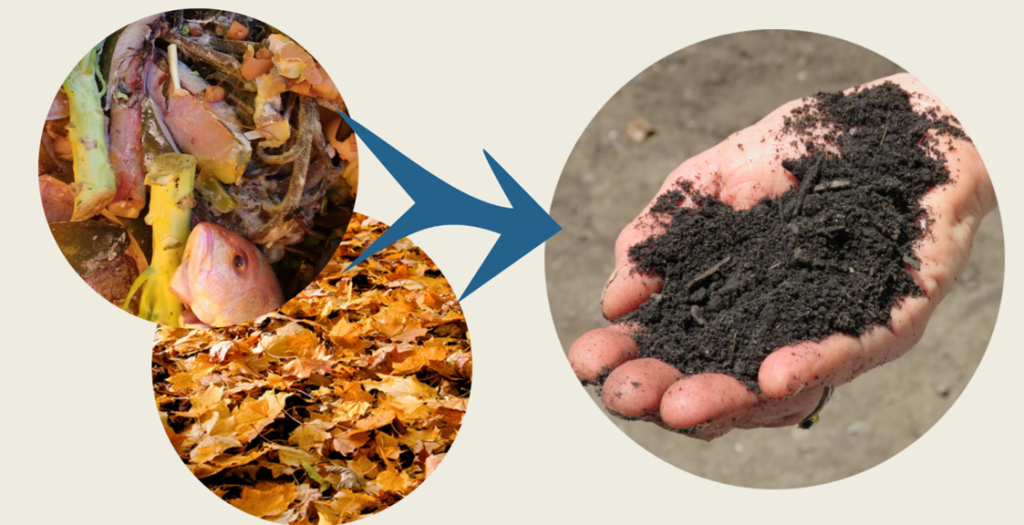
The composting process turns trash into treasure by upcycling would-be landfill waste into a valuable product.
Waste Reduction
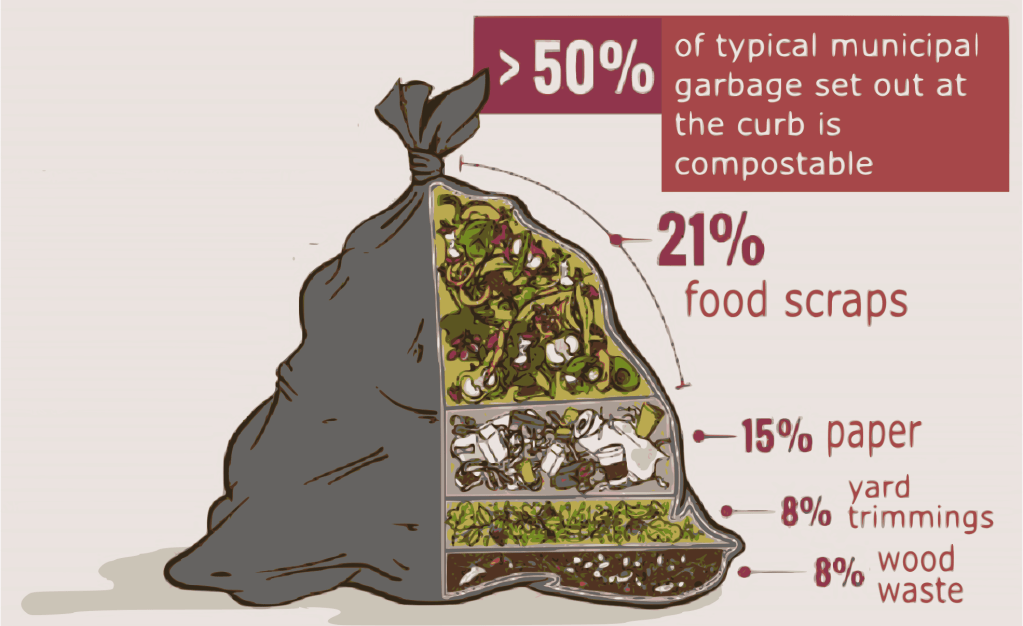
Including yard waste, some 50% of household trash, by weight, is compostable.
Diverting organic material to composting saves landfill space.
For Healthier Plants
Once organic materials are composted, the finished product is beneficial to plant health when mixed with soil, by physical, chemical and biological means.
- Physical: improves porosity of soil, enhancing water retention that supports plant health.
- Chemical: returns nutrients to the soil instead of sequestering them in landfills, reducing the need for synthetic fertilizers.
- Biological: increases the microbial biodiversity in soil helping plants be more disease resistant reducing need for pesticides.
For Cleaner Water
Stormwater runoff volume is reduced when passing through compost amended soils, recharging water aquifers, reducing erosion and limiting sediment pollution in streams.
Run-off quality is improved because organic material in compost binds pollutants and prevents them from entering our waterways.
Use of compost reduces reliance on synthetic fertilizers which are easily overapplied, impairing water quality, and whose production is fossil fuel reliant.

To Combat Climate Change
Organic materials that end up in landfills lead to significant methane emissions in this oxygen-starved environment. The majority of it will have escaped before it can be successfully harvested for energy. Methane is a potent greenhouse gas, contributing to higher overall temperatures, rising sea levels, erratic rain patterns and more severe storms.
Compost’s return to the soil serves as a “carbon bank,” helping to store carbon.

 Harrisonburg Composts